

If you’re in the physical goods space, chances are you’re familiar with warehouse management systems. Warehouse Management Systems (WMS) are essential parts of efficiently and effectively managing warehouse operations, inventory, personnel, and more. Warehouse management systems help organizations track existing inventory, schedule pickups and deliveries, optimize supply chains, improve traceability, increase labor efficiency, and reduce overhead costs, among other benefits.
As supply chains become more complex and competition in the physical goods industry intensifies, efficiently managing warehouses has become an increasingly important strategy. Gone are the days when managing via spreadsheets could cut it. Nowadays, organizations need real-time visibility into their inventory levels, which can only be achieved through integrated, automated systems.
While more and more businesses are adopting WMS systems, warehousing still has a reputation for being technologically stuck in the past. In fact, a recent study found that 40% of companies still use spreadsheets to track inventory. This article explores the pain points faced by warehouse managers and the benefits of adopting technology.
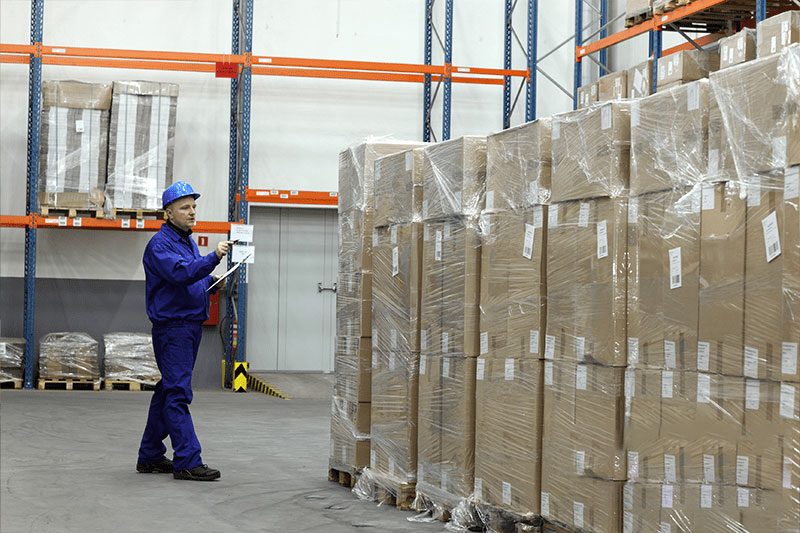
Pain points
High Order Volume Customers
Whether you’re in the B2B or B2C space, you likely have select customers who order with a much higher frequency than your usual base. These customers consume a lot of your warehouse resources and require regular picking and packing. If the customer is ordering at high frequencies and low quantities, you might see lower ROI than customers who order larger quantities in fewer intervals. Having a WMS with intelligent reporting allows you to predict the frequency and contents of these orders, so you can know in advance what resources you’ll need to allot, or even use downtime to prepare for the orders in advance.
Labor Efficiency
Warehouses, particularly those that have not adopted the latest technology, are struggling with optimizing labor efficiency. If employees aren’t equipped with mobile devices or tablets that stay on their person and are integrated with the WMS, you’re wasting countless hours relaying information. Employees having to run to the other side of the warehouse to inform another employee of an issue or deliver a spreadsheet wastes time and effort. Further, you’re lacking the impactful data needed to determine how best to pick, pack, and organize your inventory.
Lack of Real-Time Visibility
When utilizing spreadsheets or disconnected systems, there’s no guarantee of real-time visibility. If a warehouse employee picks an item, there may be a delay in relaying information to the back office. These types of lags cause errors and misreporting. Manually syncing systems to ensure the latest inventory is up to date is a time-consuming and avoidable process.
Error-Prone Spreadsheets
When managing spreadsheets, there’s a lot more room for error. Lack of visibility into edit history, adding sloppy handwriting to printed spreadsheets, no enforcement of data integrity, and “fat-fingered” typos are just some of the ways spreadsheets can cause havoc for your warehouse. These poor warehouse management practices lead to incorrect products or quantities being sent out to customers, ultimately damaging your reputation. Plus, you risk losing revenue on returns, shipping, waste, and more.
Lack of Item Tracking
Both the back-office and warehouse staff need instant visibility into stock levels. Being able to see the quantities on hand and the status of items in real time helps prevent stockouts or other errors. Plus, quickly knowing the bin locations allows laborers to allocate products accurately.
Inefficient Space Usage
Physical space is a large financial burden for warehouses. As you’re paying for each square foot, maximizing space usage is essential to running a lean warehouse. A WMS will help you understand your space utilization so you can get the highest possible ROI from your warehouse. Plus, if you’re not tracking which items are purchased most often or require the most physical resources to pack, you’re missing out on labor optimization tactics. For example, if you know that item B is physically heavy and is often ordered, moving the bin closest to your fulfillment area can help reduce manual labor requirements. This is another example of how WMS for NetSuite can optimize your space usage and provide key insights to help you improve.
Benefits of NetSuite WMS
NetSuite’s warehouse management system (WMS) allows you to efficiently run a warehouse while decreasing overhead costs and waste. Intelligent pick, pack, and ship capabilities, warehouse setup, and guided inventory receiving and putaway are just some of the features that help you run your operations with ease.
NetSuite’s WMS helps businesses increase labor productivity, reduce handling time and costs, improve order fill rates, boost accuracy, better utilize space, and achieve real-time traceability. Here are some of the key ways NetSuite’s warehouse management system can help your warehouse.
Traceability
When you adopt a WMS, you’re opening the door for improved traceability in your warehouse. With RFID and scanning capabilities in place, you can easily match lot, batch, and serial numbers across current inventory, inbound deliveries, and outbound shipments.
More efficient labor
Labor is often one of the highest warehouse costs accrued. Thankfully, Warehouse Management Systems offer several ways to reduce the labor intensity of running a warehouse. Apps on mobile phones and tablets allow individual workers to receive updates, pick requests, and communications instantly. This drastically reduces the time and effort required to physically transmit messages across the warehouse, a particularly important perk for larger operations. Intelligent systems can optimize pick schedules and effectively guide employees from bin to bin, enabling them to pick items in a shipment more efficiently. Further, these scanners and mobile apps can help reduce mis-picks and other errors that typically occur with spreadsheet management.
Less storage costs
When you run a leaner warehouse, you can enjoy major cost savings through smaller storage space requirements. With the improved reporting and management capabilities that come along with a WMS, just-in-time deliveries are made significantly easier. Firms can save on storage costs by storing only what they need at that exact moment.
Less Waste
Piggybacking on the decrease in storage costs, businesses with perishable or easily damaged goods can reduce waste in their operations by shortening the time products spend in the warehouse. This is especially important for the food & beverage industry, where shelf lives and expiration dates come into play. By gaining in-depth visibility into perishability, expiration dates, and demand fluctuations, you’ll drastically reduce the inventory that ends up being discarded.
Data Integrity
Data entry is another issue that plagues companies that have not adopted a Warehouse Management System. When you have RFID, mobile, and barcode scanners in place, workers can simply scan an item and update its status or stock quantity directly within the system. No error-prone or time-consuming data entry required.
Improve customer service
In today’s world, customers expect deliveries to be instant and seamless. In recent years, modern consumers have come to enjoy next-day (or even same-day) deliveries and are beginning to hold these rapid delivery times as the standard. It’s not much different in the B2B space. Delays in shipping times, even just an extra day for the item to leave your warehouse, can be enough to turn off customers. By optimizing your warehouse operations and responding to orders, returns, and refunds as quickly as possible, you’ll improve customer service and the end-user experience. A strong reputation with your clients ensures repeat business and word-of-mouth exposure.
Better warehouse automation
With a WMS in place, you can streamline the use of other automation efforts such as carousels, conveyor belts, and robotics. When utilizing pick-to-light, barcoding, and sensors, you can seamlessly monitor picking and packing activities. By integrating your WMS with carousels and robotics, you can utilize these machines intelligently, drastically reducing the manual labor required and maximizing ROI on your expensive machinery.
Picking Efficiency
Many warehouses struggle with picking redundancy, with multiple orders being picked individually, rather than simultaneously. With NetSuite WMS, you can gain insight into how to expertly pick and pack orders utilizing a wave-release system and multi-order picking. Pick multiple orders in a single run through the warehouse, saving your employees time and effort. Plus, mobile applications can show your employees exactly what to pick and in what order to achieve maximum efficiency.
Task Management
With NetSuite’s WMS, you can prioritize and assign tasks to your warehouse workers through their mobile devices. This enables total control over warehouse operations and the prioritization of time-sensitive tasks. Users can simply check their device and see the order of their assigned tasks, so no one is operating like a ship without a rudder.
Reporting
When you have accurate data, you can act on it and improve it. Knowing which processes consume the most labor time, which areas generate the most waste, which order types are most error-prone, and other key metrics is essential for optimizing your warehouse. With the in-depth reporting capabilities that come with NetSuite, you can easily view these key metrics and anything else you might want to know, all from a centralized dashboard.
NetSuite WMS comes preconfigured with a variety of warehouse reports, including:
- Inventory Turnover
- Category reports
- Sales per hour
- Same store sales
- Sell-through ratio
- Shrinkage
- Stock to sales ratio
- Units per transaction
- Weeks of Supply
Mobile Usage
Empower your employees to never miss a beat with NetSuite’s WMS mobile application. Utilize tablets and smartphones to give warehouse workers instant access to real-time information no matter where they’re located. Plus, the app includes smart guidance that optimizes your employee’s movements. Get recommendations on what to pick, pack, or receive next to optimize your efforts.
Customizations
Every business is unique. A great perk about NetSuite is that it can be fully customized to perfectly fit your organization. You can customize the interface, dashboards, menus, and anything else you can dream up until it’s tailored to you and your employees.
Bin Management
Easily define stock locations through the use of mobile devices, allowing your employees to easily locate stock. For smaller warehouses or retail stores, you can even define the location of products without using bins, making this key feature effective for mom-and-pop shops, Fortune 100 companies, and everything in between.
Packing Efficiency
NetSuite WMS gives your company clear insight into the order profile of each and every product. You can capitalize on this information by adopting a velocity-based approach to packing. By placing the highest-order-quantity products in the most accessible locations, you can reduce the effort required to pick, pack, and ship.
Cycle Count Planning
Inventory counting can be an extremely time-consuming and costly endeavor. Some organizations shut down their entire operations for days at a time just to conduct their yearly inventory audit. Cycle counting, or conducting an inventory audit only on specific items or areas at a time, is a great way to keep operations up and running while accurately managing inventory. However, if the process isn’t tracked properly, you risk skipping inventory and creating incorrect counts. NetSuite’s Warehouse Management System allows you to effectively plan and execute cycle counts for maximum accuracy and minimal effort.
Improved Supply Chain
When automated systems are helping warehouse laborers manage delivery schedules, improve demand forecasting, and run overall leaner operations, businesses are better able to time their inventory orders. Some side benefits include giving key suppliers more manageable lead times, allowing suppliers to better predict your delivery needs, cadences, and volumes, and decreasing delivery costs.
Better Back Office Automation
Everything that happens within the warehouse must be visible to the back office, preferably in real-time. When your WMS is loosely tied to your accounting software, for example, you risk delays in data processing times through APIs and scheduled data dumps. The problem is even worse when managing off of spreadsheets. When you have a single system like NetSuite serving as your warehouse management system, as well as your accounting, finance, CRM, marketing, and more, you can enjoy real-time data flow and guaranteed accuracy.
Conclusion
NetSuite Warehouse Management System is an incredibly powerful solution that can be perfectly tailored to your organization. It allows warehouses to prevent out-of-stock situations, fulfill orders quickly, better manage suppliers, improve logistics, reduce manual labor, and much more. With these optimizations, you can run a leaner warehouse with lower overhead, boost productivity, and fortify your bottom line.
Even better, this cloud-based system means that everyone is looking at a single source of truth. From accountants on their back-office computers to dock workers on their mobile devices, you can ensure that everyone has 100% visibility into what is happening, where it’s happening, and when.
While there are many options out there for a WMS system, there’s only one that’s part of the world’s leading cloud-based ERP system. After all, your business is more than just a warehouse. You’ll need fully functional accounting, HR, sales, and marketing software to keep your warehouse afloat. Rather than investing in several point systems and tying them all together with APIs and messy integrations, it’s best to invest in an all-in-one software solution like NetSuite.